For most of history, your bank held your financial data behind a locked door. If a budgeting app, a lender, or a new fintech wanted to see your transactions, tough luck. Open banking is the idea that flipped that on its head: your financial data belongs to you, and you should be able to share it, securely and with your permission, with whatever apps you trust.
It sounds small. It’s quietly one of the most important shifts in modern finance. Here’s how it works, and who’s building the infrastructure behind it.
What is open banking, in plain English?
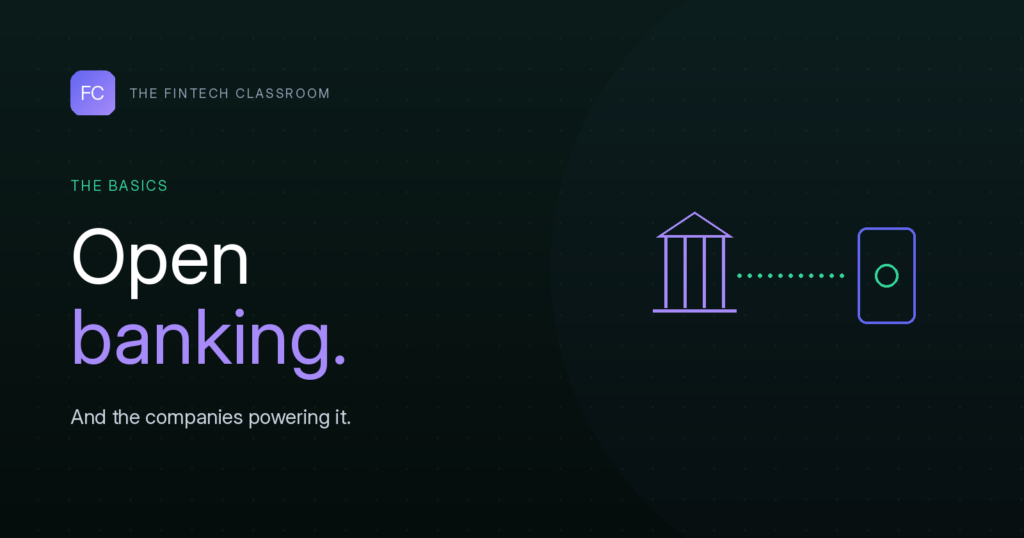
Open banking is a system that lets you grant third-party apps secure, permission-based access to your bank account data and, in some cases, the ability to make payments on your behalf.
The key words are consent and secure. You’re not handing over your bank password to a random app. Instead, a regulated connection lets you approve specific access, and you can revoke it whenever you want. It’s the difference between giving someone a copy of your house key versus letting them in through a monitored door you control.
How does open banking actually work?
The magic happens through APIs (Application Programming Interfaces), which are just standardised ways for one piece of software to talk to another.
When you connect your bank to a budgeting app, the app doesn’t scrape your screen or store your login. It uses an API to request specific data after you approve it. There are broadly two flavours of what these APIs enable:
- Data access (AIS): reading your account information, like balances and transactions. This powers budgeting tools, lending decisions, and account verification.
- Payment initiation (PIS): actually moving money, letting you pay directly from your bank account without a card. This powers “pay by bank” checkouts.
Most people never see this layer. They just see a smooth “connect your bank” button. Behind that button sits a whole industry.
The companies powering open banking
Here are some of the key players actually building the pipes, both globally and in African markets.
Global infrastructure
- Plaid is the dominant name in the United States, connecting thousands of banks to apps for data and payments. If you’ve linked a bank account to a US finance app, you’ve probably used Plaid.
- Tink, now owned by Visa, is a European leader, strong on bank connectivity and payment initiation across the continent.
- TrueLayer is a UK and Europe specialist focused heavily on instant bank payments, powering a large share of “pay by bank” transactions.
African infrastructure
- Mono has emerged as the leading standalone open banking provider in Nigeria, helping businesses access bank data and collect payments with user consent. It was acquired by Flutterwave in early 2026, a sign of how strategically important this layer has become.
- Stitch is a South Africa-born player that has leaned increasingly into payments, raising significant funding and expanding its reach across the continent.
It’s worth noting how brutal this space is. Okra, once celebrated as Nigeria’s open banking pioneer, shut down in 2025 after years of regulatory delays and tough economics. Building financial infrastructure ahead of clear regulation is genuinely hard, which makes the survivors all the more important.
Why open banking matters, especially in Africa
In wealthy markets, open banking is mostly about convenience: slicker apps, easier payments. In African markets, the stakes are higher. Reliable, consented access to financial data can unlock credit for people who’ve never had a formal credit score, power cheaper account-to-account payments that bypass expensive card rails, and let small fintechs build products that used to require a banking licence.
The catch is regulation. Nigeria only finalised formal open banking guidelines relatively recently, and the rest of the continent is at varying stages. The infrastructure is being built faster than the rulebooks, which is exactly why this is a space worth watching closely.
Frequently asked questions
Is open banking safe? It’s designed to be. You grant specific, revocable consent through a regulated connection, rather than sharing your bank login directly.
What’s the difference between data access and payment initiation? Data access lets an app read your account information. Payment initiation lets it move money on your behalf, with your approval.
Which companies provide open banking in Nigeria? Mono (now owned by Flutterwave) is the leading standalone provider, with Stitch also active across the continent.
Do I need open banking as a regular person? You probably already use it without realising, whenever you connect your bank account to a finance app.
The Fintech Classroom